
| When you experience a toxic situation at work, it can be difficult to know whether to report the incident to HR. To help you think through the decision, start by asking yourself these questions. How does my organization handle HR issues? Are there clear reporting protocols and processes in place? How have similar issues been dealt with in the past? Will your claim be investigated internally, or will an outside agency be retained? The answers to these questions can help you weigh the personal risk of reporting against the possibility of change. What outcome am I seeking by reporting the issue? Is there a specific outcome you want? Is it more about feeling seen and heard, or are you looking for financial or another type of recompense? Are you hoping for the violator to be punished or fired? Being clear with yourself about the desired outcome will empower you to assess trade-offs and risks more confidently. Do I have support and good counsel? Do you have executive backing for raising this issue? Do you have someone with legal and HR knowledge guiding you? Even if you don’t have formal support, you’re not powerless or without options. Look to your manager, mentors, and trusted colleagues to back you up. |
Career & Office
Use Curiosity to Shape Your Team Culture…

To foster a culture of adaptability, engagement, and high performance on your team, you need to demonstrate consistent curiosity about your employees, yourself, and your organization. Here’s how:
- Curiosity about employees. Organizations are a collection of the mindsets, attitudes, and values of the people that work within them. To shape your team’s culture, you need to understand people’s values and motivations. Talk to employees directly, formally survey them, or engage in focus groups about the team’s culture to tap into your collective wisdom.
- Curiosity about yourself. As your culture evolves, you must too. Reflect with open-mindedness on your own role. Ask yourself: How have I evolved over time within this team and this organization? The better you understand your own position in the culture, the better suited you’ll be to lead and shape it.
- Curiosity about the organization. Great leaders don’t just shape culture once—they stay curious about the changing nature of their companies and contexts over time. How have your organization’s mission, vision, and values changed? How has the personnel changed? And how have all of these factors affected the culture along the way? The more you understand your cultural context, the better equipped you’ll be to navigate it.
Enhancing Your Professional Growth Through Strategic Networking…

In the dynamic realm of professional development, the art of building meaningful relationships cannot be overstressed. However, the true power lies not just in networking, but in crafting a network that strategically enhances your performance. The objective is to cultivate a circle that compensates for your areas of improvement rather than merely echoing your existing competencies.
Understanding Your Cognitive Style
The journey begins with a deep dive into self-awareness, specifically understanding your cognitive style. Are you an innovator, brimming with novel ideas but perhaps finding implementation a challenge? Or are you an adaptor, proficient in executing ideas but finding creative brainstorming outside your comfort zone? Identifying your position on this spectrum is pivotal.
Mapping Your Professional Network
With this insight, the next step is to map out your professional network. This includes everyone from colleagues and collaborators to mentors and industry acquaintances you engage with. Classifying these contacts—be it close colleagues, mentors, or leaders—helps in understanding the dynamics of your existing network.
Cultivating Complementary Connections
The essence of a performance-boosting network lies in its diversity, particularly in complementing your cognitive style. Seek out individuals whose strengths balance your weaknesses. Fostering these complementary relationships is the key to unlocking a synergy that propels you toward greater professional efficacy.
Building a network that truly enhances your performance is about more than just expanding your list of contacts. It’s about strategically aligning with individuals who bring out the best in you, covering areas where you might not naturally excel. By doing so, you not only enrich your professional journey but also contribute to a more collaborative and innovative work environment.
How to Support Nursing Parents at Work…

| Is your workplace supportive of nursing parents? As a leader, you can help your organization go beyond simply complying with new regulations and signal commitment and care for nursing employees returning to work. Start by considering the spaces available to employees who need to pump at work. Ask yourself: Do we have enough pumping rooms for the size of our workplace? How is the location of these rooms communicated? How do employees schedule the use of the rooms? When a room is in use, how is that communicated in a way that creates goodwill? And is it a warm, welcoming, and well-equipped space? Next, seek input from your employees who have used the space (or who might use it one day). You might ask them: Where did you get most of your information regarding pumping at work? Were you able to easily locate pumping rooms? Did workplace pumping rooms offer a comfortable and user-friendly environment? What was missing? What benefits and support would you add? Assess the responses and look for ways to improve. Even small things—like a sturdy chair with a straight back, user-specific cubbies, and a clean refrigerator—can make a big difference. |
Scared of Feedback…
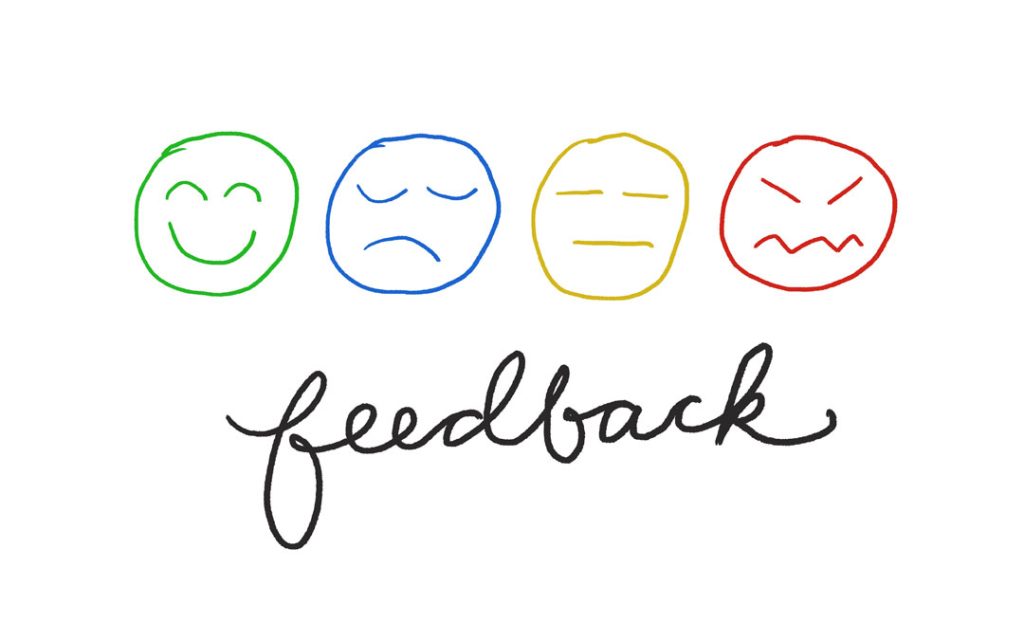
Yes, we all are scared of feedback especially negative ones.
But only that can help you grow, help you see your wrong side, and improve it.
Anyone or any entity that is scared of feedback will not grow!
So take feedback, improve, and grow.
When You’ve Lost Trust in an Employee…

Leaders who don’t trust their employees are often more anxious, hesitant to delegate, and prone to micromanaging. A lack of trust can also diminish innovation, morale, and team performance. Here are five steps to take if you’re in the uncomfortable position of not trusting one of your employees. First, separate facts from assumptions and focus on specific problematic behaviors. What exactly did this person do or not do that has led to your distrust? Next, make a list of the areas in which you do trust your employee, and consider how you might incrementally build on these areas in low-risk ways.
Focus on clear and frequent communication—checking in regularly one-on-one—as you delegate and add to their responsibilities. It’s crucial to provide feedback on the behaviors that are leading to your distrust. Be specific; is it their competency, consistency, or character that’s degrading your trust? Ask for their feedback too, and honestly reflect on what you might be doing (or not doing) to contribute to the situation. And finally, ask yourself if the breach of trust is repairable. If it isn’t, it might be time to part ways.
Promote Curiosity on Your Team…

How curious is your team? When you build a culture of curiosity at work—where employees are encouraged to ask tough questions, challenge the status quo, and explore their interests—people feel more seen, heard, and motivated. Here are some statements you can say more often to promote this kind of culture on your team.
- “I don’t know.” Being intellectually humble is a rare but valuable quality in a leader. When you admit the limits of your knowledge, you implicitly encourage others to offer up their interpretations, questions, and ideas. In other words, not knowing all the answers creates space for curiosity.
- “Tell me more.” This simple follow-up statement is a powerful demonstration of curiosity that allows you to dive beneath the surface of a conversation. People almost always have more to say—they’re just waiting for your attention and permission to say it.
- “I understand that you’re more than your job.” Simply acknowledging the reality that we’re all impacted by our personal lives, relationships, and the events of the world creates new opportunities to address those things and provide support if needed.
- “Who else has something to share?” The best leaders know that insights and solutions sometimes come from surprising people who are rarely invited to the brainstorming or decision-making tables. Be proactive about bringing those voices into discussions.
Do People See You as a Strategic Thinker?

Are you a strategic thinker? And more importantly, do your boss and senior leaders see you that way? Here are some ways to show key people in your organization that you’re leadership material.
First, communicate your perspective. When talking to your manager and other leaders, demonstrate that you’re forward-looking and well-informed. For example, instead of focusing on short-term specifics, look for opportunities to offer observations about the big picture. Using language such as “Considering our organization’s three-year vision…” or “Reflecting on the trajectory of innovation in our industry…” shows a strategic vision.
Next, showcase your critical thinking. Being strategic is often about anticipating possible outcomes or unintended consequences—and connecting the dots not everyone sees. For example, “This product has the potential to…” or “Beyond the immediate benefits, our long-term gains include…” If you regularly position yourself as an analytical voice of reason, decision-makers will begin to trust your input over time.
Finally, simplify the complicated. Strategic thinkers can break down complex situations in simple yet powerful terms. To distill complicated issues down to their essentials, use explanations like “In essence, this technology can…” or “At its core, our strategy rests on three pillars…” Analogies and metaphors can also bring your comprehension to life—and make it relatable to a broader audience.
Are You Taking Work Too Personally?

Our jobs often offer a sense of purpose, growth, and community. But when we’re invested in our work, it’s easy for us to take interactions, decisions, or feedback personally, which impacts our emotions, self-worth, and identity. If your professional role has become too intertwined with your sense of self, here’s how to put things in perspective.
First, practice de-identifying from your feelings with statements like “I am observing this feeling, but I am not this feeling,” or “I can notice this thought without letting it consume me.” By recognizing your reaction, you can create a space between the triggering event and your response.
Next, before you spiral, pause and ask yourself: “What am I interpreting this situation to mean about me?” Through this pattern of interruption, you can examine your assumptions and look at the situation more objectively. You can also challenge yourself to consider alternative explanations for someone’s behavior or words.
Finally, instead of asking, “Why is this happening to me?” focus on more constructive inquiries. Asking “What can be done?” will shift you into a problem-solving mindset. And asking “What can I learn from this?” will encourage you to extract wisdom from your experiences.
Boost Morale When a Popular Employee Quits…

It’s disruptive when a team member quits—especially one who’s beloved by their colleagues. Here’s how to reallocate their responsibilities, rebuild the team’s workflow, and rejuvenate morale.
Acknowledge their departure promptly. Be sure to speak positively about the person who’s leaving. Recognize their contributions and acknowledge the challenges you expect to face in their absence.
Ask people to share their feelings about the changes on the team. This is good to do in both group and one-on-one settings. Answer any questions as transparently as you can, without revealing any confidential details about your colleague’s departure.
Then affirm what isn’t changing—namely, the team’s collective strengths and shared values. This will reassure people that while change is coming, the foundation of what you do will remain consistent.
Next, reassess priorities. Moving too quickly to reassign the departing employee’s responsibilities may cause more harm than good. Take some time to review your team’s overall priorities, then determine which parts of their work fit into the big picture and which don’t. You may find a few tasks you can drop temporarily or discontinue altogether.
Finally, focus on strengthening the sense of community on your team. This could mean celebrating milestones or planning team gatherings that allow people to connect offline.