Boost Your Team’s Productivity? Really?


As Manager or Leader, one of the most critical problems is How to increase our Team’s Productivity. We constantly think about it and keep reading trying different things to achieve it.

Some of the main points (From different sources) are:

1. Set the best example for your team.
2. Set Goals and Clarify expectations.
3. Encourage open communication.
4. Give team members autonomy.
5. Give team decent breaks or holidays, so that they are not overworked.

There might be more…But does these work?

One of my friend who is based out of California(US), had set up an office in Delhi and did all of the above but the team was not productive. Moreover, the employees’ came late and had started taking things for granted. He wasted 6 months and couldn’t figure out the problem. In the end, he hired an experienced Ops manager. Who rolled out his stick, kept attendance registers, fixed timings, a penalty in coming late etc and Baam!!! –  It started improving. Last I discussed he was happy with the output and didn’t care much about the above rules.

Take away:– Some of these rules might work in a culture, probably US-based team, but may not work in other culture. All the books/literature we read are typically based on US environment and hence should be taken with pinch of salt. It might not work in a different country or culture. In the Indian context where we have been trained to obey the rules from childhood and even in school/colleges being driven by “Stick” more than “Carrot” these rules as it is might not work.

We need to have “Carrot” and “Stick” in right mixture…

What rules do you think applies to the Indian context? Please share your comments…

6 Ways to Go from Good to Great

What we can learn from Good-to-great companies?

How does strategic management differ at good-to-great companies versus mediocre ones?

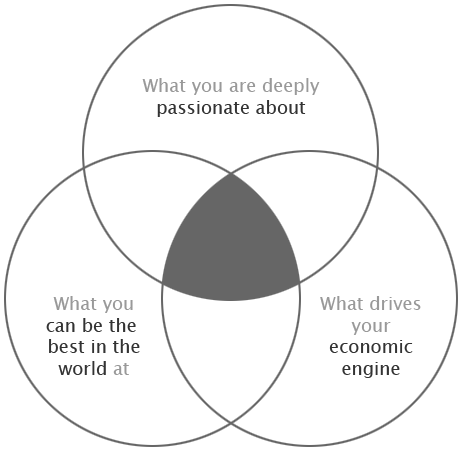
# Finding a simple “Hedgehog concept (Shaded part – Intersection of passion, skill, and economic value)“ provides a clear path to follow.


# Success comes from many tiny incremental pushes in the right direction.

New technology should be viewed only as an accelerator toward a goal, not as a goal itself.

How do the people and culture differ at good-to-great companies versus mediocre ones?

Team drives successful transformations from good to great. Right people in the right place are the foundation of greatness.

Success requires confronting the nasty facts, while never losing faith. Leaders must create an environment where the brutal facts are aired without hesitation.

A culture of rigorous self-discipline is needed to adhere to the simple Hedgehog concept.

Follow the above steps to build a great company.

Scattered Priorities

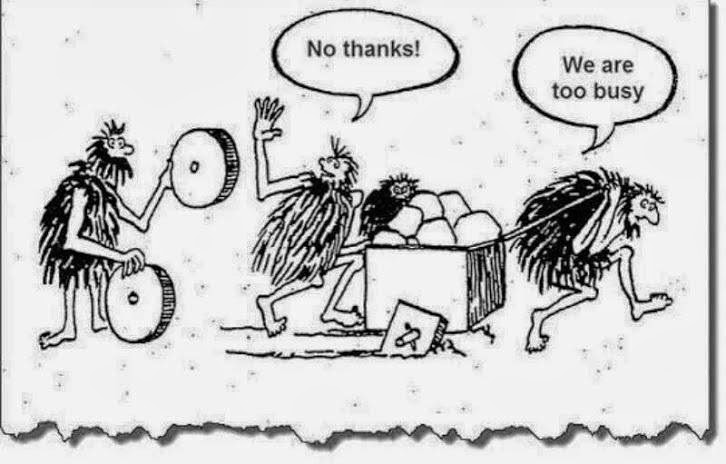
Scattered Priorities is one of the biggest hindrances in achieving success, as they say, “If you have more than 3 priorities than there are no priorities”.

It’s true not only as leaders, managers or entrepreneurs but at our personal level as well. Think about it when u have tried to accomplish too many things nothing happens.

So why do we do it? Why we set ourselves for failure aiming too many things to achieve? Here are few:

1. Our Fear of Failure or Insecurity:

To safeguard ourselves from failure we build a facade of different priorities or tasks. But imagine the fallacy of this, if you fail in your prime task or priority, is it not better to fail and try again, than to compromise? As said, “There is no reason to have Plan B because it distracts from Plan A“.

2. Lack of Self-Believe:

We do not want to commit to one thing, as we are in self-doubt. It might be because of what others think about us or past failures or lack of determination to make it happen.

3. Too many options leading to indecision:

Sometimes we get too many choices to decide and instead of taking the time to decide, we pick 2 or 3 options and start running with it.

4. Smart-A** expects as s/he can do 10 things together, so can the team or subordinates:

This is true for leaders, entrepreneurs, and managers. They think that since they can design, review business, talk sales simultaneously hence everybody should do 5 things together.
It’s a big fallacy since the leader would have reached this level of productivity in the field with almost 10+ years of experience or more. Expecting same with the team is sure recipe for failure. A team should have a coherent goal and corresponding set of tasks to be achieved. Just to keep them busy with more tasks helps to do nothing.

What else do you think leads us to scatter ourselves and setting for failure? Please share your thoughts in comments

Speedstorming for Product Ideas

Are you stuck without any ideas on how to take your product to the next level, or achieve next product goal(s)? Our usual idea meetings take an infinite amount of time and without any conclusion. And what’s more not everyone contributes to the ideas.

Here is a simple process which gets rid of all these issues, please try and share your feedback.

To implement speedstorming, need to have a minimum of five people who have some familiarity with your market, five blank sheets of paper, and a watch.

Here is how it works:

1. Seat all five people at a table and give them each a blank sheet of paper. Make sure they know that during this exercise they can’t discuss their ideas or look at one another’s sheets of paper.

2. Tell them all to come up with three product features/ideas, give them five minutes, and set the timer on your watch for five minutes.

3. When the timer goes off, have the participants pass their paper to the person seated to their left.

4. Repeat steps 2 and 3 five times, except for the final time have everybody give their sheets to the person leading the product development effort.

Just like that, you should have 75 ideas to consider for your product. Even if two thirds
of the suggestions are not particularly useful, this would still leave you with 25
pretty decent ideas to start from.

What makes this process work well is that it gets all five people involved. If you were to try to do the same exercise with a whiteboard, you would likely get far fewer ideas,
and some of the people in the room would contribute little, often because they are shy. This process gets everyone involved, and it’s actually fun as well!

Slow as a tortoise or fast as rabit….

In a Startup, Single question is how to execute well to reach targets. Be it traffic, customer acquisition or revenue numbers. Whether it should be the Fail-fast approach to try everything and learn from failures.  Or Steady approach where we try one or two steps and execute it well.

Both have pros and cons:

Fail-Fast Approach:

Try out everything to achieve goals and learn from failures.

Let me start with Cons….

Cons:
I have seen that fail fast approach kills you, frustrates you to the core, it’s like you grab everything that needs to be done, starting from Mobile Apps, Social Medias, Server performance, B2C & B2B and even investors’ whims of launching any new features etc. This leads to failure in almost 90% of things you do, only 5-10% succeeds. And if you have competitors doing well, you are doomed.

Pros:
You learn in each step you take, each feature, market or targets makes you learn immensely, which can be applied to next level. Yes, if things go to next level….

Steady Approach:

Taking one or two steps and executing it well.

Cons:
Since you have taken one or two steps, if you fail you have nowhere to turn to. This failure can lead to close down or shutdown.

Pros:
As execution is key, and you will be focusing on executing one or two things, there is very less chance you will fail. In fact, you can figure out better solutions in that particular field which can be the differentiating factor between you and your competitors.

For me its favoured towards taking 1-2 good steps where you can really crack things up.

Note: – Mind you execution speed has nothing to do with product launch dates, product launch should always be agile and delivered in the fastest way possible.

Why almost all IT persons want to do a startup?

Why almost all IT persons want to do a startup and nobody tries it?

This seems more like Quora question let me try and answer it here.

So you have been in IT for past some years ( Varying from 3 yrs to 10+ yrs) and are visiting couple of college friends or colleagues, whats the discussion like girls/travel or starting a IT startup and get big bucks..

I bet startup is one of the main discussion point and everyone seems to have unique ideas that can be converted into million bucks Ah! if we had some money or time we would done it for sure!

It seems the main reason to do a startup is to get crazily rich in much shorter time, and hence everyone gets attracted to it. Grass always seems greener on other side, so when u r in job, it seems the owner of ur company has such an easy job running the company….

Why nobody tries it?

Not a right time and never will be, abhi to muskil hai yaar. Have to pay my new apartment EMIs, buy a car, or getting married thousands of excuses comes in mind.

Is it mainly money constraints or fear factor…

Let me know what u think?

Building brand…

Dont bounce off looking at the topic, this is one of the most discussed topic and everyone hates it 🙂 . A startup specially internet startup spends most of the time/resource thinking how to build brand ? how to increase direct traffic ? blah blah…..

Here i do not want to get into 10 steps for building brand but rather would like to ask some very obvious questions, so when next time there is a brand / direct traffic meetings with a brand consultant, you know what to look for..

Do you know what user wants? This is the most important question and should be answered completely before even getting into any meetings forget brand/direct. If you do not understand your users, what they want? why are they coming to you? and whether u are able to answer their queries. Go get this first, talk to users/read analytics/understand them.

One example stands out for me: We were suppose to have a consumer call with one of our power sellers, this was in one of the marketplace website where power seller can sell products to users. We were about to release a major enhancement which all the power sellers were aspecting and I was very skeptical about the meeting. I was aspecting a good bashing about the feature not yet released and loses the power seller is incurring because of delay in release etc. Guess what he was waiting for a minor bug fix which was not even added in our release cycle, it was a simple address switch based on country selected by users, so that buyers are comfortable with this seller. Infact he did’nt wanted any of the hi-fi feature we were building and told me upfront in the meeting. Moral of the story is talking to the power sellers (Our user/customer) made me realized the actual user problem and solve it much faster making him happy customers. Now that builds brand!

So next time you walk in to any of the brand meetings ask What does user want? If none is aware, initiate a user interactive session, that will be much more productive rather than brand consultants and these unnerving meetings with no conclusion.

As the saying goes “User is the king”!!


Story of a marketer..

How a story of a marketer can change fortune of an internet company. There was an internet company that was doing its bit of struggling, trying hard reaching traffic numbers, and trying to scale to the next level. It got good funding after struggle, funds was raised for marketing , building brand and increasing direct traffic to the website.

And than came the marketer he was like “pied piper of hamelin” with all sorts of bells and whistles. Guess what would have happened once he is in and started taking marketing. Whole traffic / direct /free dropped because of pied piper, and he still continues to kill the traffic but imagine the traffic still persists.

Everything than started falling and at the end company was no more……

Guess whats the moral of the story ?