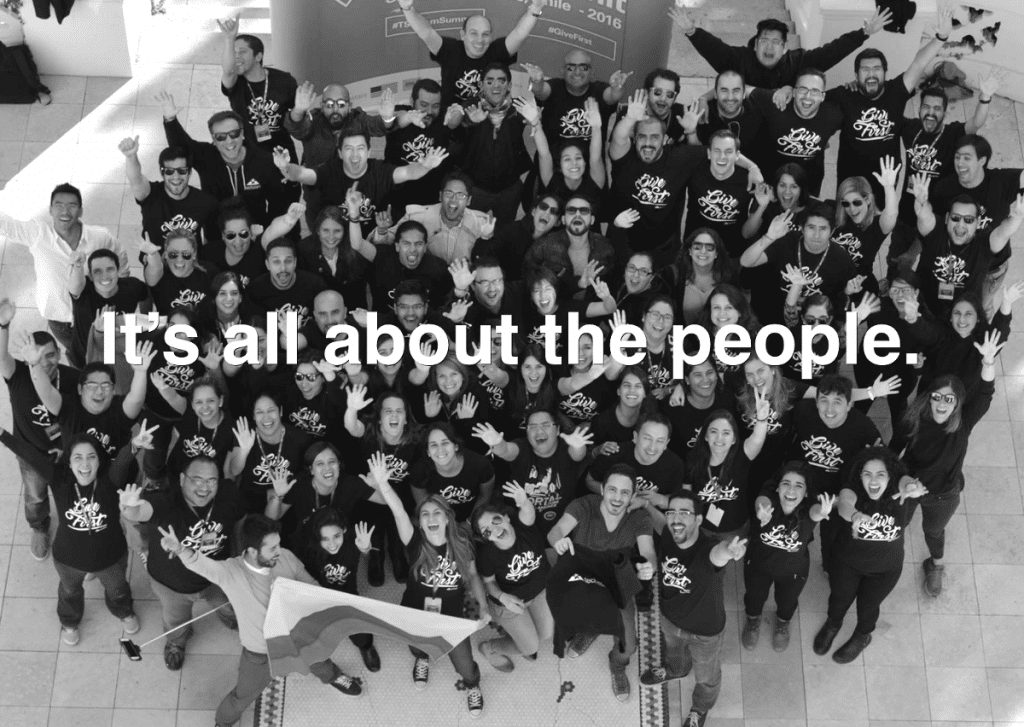
Connect with people to connect with yourself…

There are a lot of ways to connect with yourself.

You can connect using meditation.

You can connect using music.

You can connect using religion.

You can connect using sports.

Anything with a lot of dedication and hard work helps us connect with ourselves. 

But one of the best ways to connect with ourselves is by connecting with others; specifically with the people who need us the mosts, knowing them, knowing their pain, helping in their distress, and being with them in thick and thin.

Wings of Fire…

I have read many books on self-help, management, and leadership, of US companies, and of billionaires.

But of them all, “Wings of Fire” by A. P. J. Abdul Kalamji is one of the top books I read in all the verticals.

It’s not just the story of a man – Kalamji, a leader, a visionary but a story of the definition of vision, the definition of wealth, the definition of impact, the definition of management, and most important definition of one’s destiny to achieve success.

In contrast to today, where wealth is defined by How rich you are? How much money did you collate? Where u travel? Where u live? Where u work?

It shows a journey, where wealth is defined by how much impact you have on your country, on your team, and on your people.  

I run a company where we have impacted 10 million students, and we have helped them succeed in their education. We have very less revenue and we are on a verge of closure. But this book guided me to see this as a success rather than a failure.  Impacting 1 Crore student’s education in India is a dream come true thru my company. Yes, we couldn’t raise funds, and yes we couldn’t generate enough revenue. But if there would have been really good governance in India, it would be a different story. (But this is a story for another day).

Read this book to understand what really wealth is, or could be. Understanding how your destiny helps you to take a path that sometimes baffles you. 

Also to learn how to manage people. Learn how to be a humble leader at the same time a visionary leader and learn how our faith can help us achieve anything in life.

Input Metrics vs Output Metrics…

Our end goal metrics are output metrics, for example – Revenue, Cash inflow, Traffic, or No. of Active users are output metrics.

Input metrics are controllable metrics that drive these Output metrics.

If traffic is your output metrics then input metrics can be “no. of quality content posted in regular intervals”. 

For revenue, “no. of qualified lead calls per day” can be input metrics.

There can be different input metrics to achieve the same output metric. 

Also, we have control over output metrics only thru input metrics. To control output, we must understand how inputs affect the outputs of the system. And which one to use for achieving our output metrics.

Moreover, it’s not just “no. of content” posted per day. We identified no. of quality content posted per day. The “Qualifier” is critical because we don’t want any “content” we want “quality content” that can engage users and also in regular intervals daily, weekly, monthly, etc. So both the qualifier and interval are critical parts of the input metrics.

In general, our plans be it for external or internal teams are for output metrics; revenue, users, etc. But unless we break it into controllable input metrics and put targets for input metrics, we will not be able to achieve our output metrics.

Identifying Input metrics is hard because what seems obvious can lead to different output metrics or may not even achieve it. It takes time, analysis, and hard work to really understand and identify the core input metrics. And that’s what creates a big differentiator between successful and unsuccessful companies.

A successful company has more clarity on input metrics and how it drives output metrics.

Avoid These Phrases in a Tough Conversation…

Navigating Through Tough Moments

Difficult conversations are difficult for a reason, and when you’re anxious or stressed out, it’s easy to say the wrong thing. To keep the interaction from going sideways, avoid these common mistakes.

  1. Don’t assume your perspective is obvious. Steer clear of phrases like “clearly,” “obviously,” or “without a doubt,” which are likely to insult your counterpart.
  2. Don’t exaggerate. Skip any statements that start with “You always…” or “You never…” They’re rarely true.
  3. Don’t challenge someone’s character or integrity. You’ll just make the person defensive if you tell them they’re “unprofessional,” “wrong,” or “unethical.”
  4. Don’t tell others what they should do. People feel judged by “should” statements. Try saying “You might consider…,” “One possibility is…,” or “Have you thought of…?” instead.
  5. Don’t say “It’s not personal.” Recognize that even when it’s not personal to you, it might be for the other person.

It’s the People…

It’s the People

People are the foundation of any company’s success. The primary job of each manager is to help people be more effective in their job and to grow and develop. We have great people who want to do well, are capable of doing great things, and come to work fired up to do them. Great people flourish in an environment that liberates and amplifies that energy. Managers create this environment through support, respect, and trust. 

Support means giving people the tools, information, training, and coaching they need to succeed. It means continuous effort to develop people’s skills. Great managers help people excel and grow. 

Respect means understanding people’s unique career goals and being sensitive to their life choices. It means helping people achieve these career goals in a way that’s consistent with the needs of the company. 

Trust means freeing people to do their jobs and to make decisions. It means knowing people want to do well and believing that they will.

— Trillion Dollar Coach

Cybersecurity during a Crisis…

Cybercriminals love a crisis. With many more people working remotely, they are undoubtedly poised to capitalize on security flaws, but there are several things you can do to protect yourself and your company. Be on the lookout for phishing emails designed to entice you to click on the latest and greatest offer related to coronavirus protections, or with urgent instructions from your boss. Their intent is to get you to unwittingly download malware onto your device and the company’s systems. Make sure your devices are up to date on their anti-virus protection.

Use multi-factor authentication on any accounts for which it is available. Avoid the temptation of using Bluetooth in a public place — it is an easy way for hackers to connect to your device. Only work on secure, password-protected internet connections. If you have to use public WiFi, be sure to verify with the owner that the network to which you’re connecting is legitimate and secured through a password.

Avoid accessing any confidential or sensitive information from a public WiFi network. And be sure to report any lost or stolen device immediately to minimize the risk of fraud.

How to Encourage Participation During Virtual Meetings…

Virtual Meetings

It’s hard to get people to pay attention in meetings when everyone’s in the same room — let alone if they’re all calling in from home.

How can you get people to actually participate in a virtual meeting? The key is to create structured opportunities for attendees to engage. Do something in the first 60 seconds to help participants experience the problem you want them to solve. For example, you might share statistics or anecdotes that dramatize the topic. Then assign people to groups of two or three and give them a very limited time frame to take on a highly structured and brief task. Be sure to give them a medium with which to communicate, like a WhatsApp group.

If you’re on a virtual meeting platform that allows for breakout groups, use them liberally. Then ask the teams to report back. Never go longer than five to 10 minutes without giving the group another problem to solve. The key is to set and sustain an expectation of meaningful involvement.

Otherwise, your participants will retreat into an observer role, and you’ll have to work extra hard to bring them back.

You Can’t Over Prepare for a Presentation…

Writing a speech or presentation is challenging, and memorizing it takes even more time and effort. But whether you’re speaking at a conference, setting a direction for your team, or persuading upper management to greenlight an idea, it’s important to know your presentation cold.

Transitions can be especially tricky, so break your talk into sections and rehearse the shifts between the sections. Note any troublesome segues and practice them repeatedly. Then, spend time each day memorizing your speech. You might consider recording and listening to it whenever you’re driving, exercising, or running errands. Or you can rehearse a portion of your script right before bedtime or multitask as you brush your teeth.

Finally, have a plan for any slip-ups. Prepare two or three go-to phrases, such as, “Let me refer to my notes,” or “I’m struggling to remember my next point. Let me take a moment and step back.” The lapse will be less awkward for everyone when you don’t panic and do what you need to move on.

Don’t Let “Perfect” Be the Enemy of “Good”

We should all strive to do our best, but if we always aim for perfection, we may blow deadlines, annoy colleagues, and miss out on opportunities.

Instead of never being satisfied with “good enough,” talk to others about their standards. What does a good job look like to boss, peers, or client? Let’s seek their feedback on expected results, costs, and timelines rather than trying to meet extremely high standards. Then check in regularly with these colleagues. Don’t wait until the project is finished, build in checkpoints where you share your progress at 50% or 80% done. Your boss or client just might tell you that the work is good enough at that point.

You can also try small experiments where you relax your standards slightly. What happened? Were your worst fears realized? Finally, consider how perfectionism impacts your relationships. Are you setting unrealistic standards for those around you? The need to have it “perfect” will often annoy others, and in extreme cases, drive them away. For their sake — and yours — let’s learn to be satisfied with good enough.

Criticism or Praise…

If you have to criticize someone, then don’t criticize the person, criticize the general approach or criticize that class of activities.

If you have to praise someone, then always try and find the person who is the best example of what you’re praising and then praise that person, specifically.

That way people’s egos and identities, which we all have, don’t work against you, they work for you.