A day without anger (resentment) is the most productive day. We accomplish most on that day in comparison and are more energetic at the end of the day.
All the talk about focus and increasing productivity is thrown away the moment we meet anger or resentment.
Observe a day and notice that the more we feel angry or resented about things or people, the day becomes more exhausting.
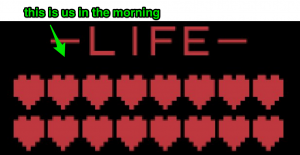
It’s like a video (computer) game, you have an energy bar when you start and anger keeps eating the bar till you bleed out at the end.
So…
If its chronic anger (resentment) start taking baby steps to solve it.
When you express your honest opinion during an interview, you present yourself as you are, not as who you think the employer wants you to be. But disagreeing with an interviewer isn’t always easy because of the imbalance of power. Navigate the potential downsides by doing a few things before and during the interview.
First, research the company. Is the culture one where people are receptive to new ideas? Are the organization and its founders are known for inclusion and open-mindedness or do they have a slow-moving, legacy mindset? During the meeting, if the interviewer asks a question that gives you pause, resist the urge to answer immediately.
Take time to formulate a thoughtful response. And ask for permission to provide a different viewpoint. Say something like: “I see this differently. May I share my perspective with you?” Of course, follow your gut. If you think disagreeing won’t be well-received, then bite your tongue.
If the interviewer made you uncomfortable — if you felt dismissed or unheard — trust your instincts. When expressing differing opinions isn’t welcomed in an interview, it probably won’t be encouraged once you’re part of the company.
We are often told to pursue work we’re passionate about, but for many people, this simply isn’t feasible. Luckily, research shows that doing something you care about outside of work can benefit both your personal life and your career. Look for ways to craft your job to allow for more time for non-work passions.
For example, if you have some autonomy over your hours, start your day early to make more time in the evening for cultivating other interests. These extracurricular activities can be a way to develop skills, meet new people, or decompress. To find the right activities, ask yourself what you care about that you haven’t been able to pursue in your job. Outside of work, you have the freedom to try new things out, so experiment.
Remember that passions can wax and wane over time, and it’s okay to stop one activity and pick up another. Find other people who care deeply about your shared interest so you can build a sense of community.
Only a privileged few are able to match their passion to their job, but leading a full life outside of work allows us to bring our best selves to the office — or anywhere we go.
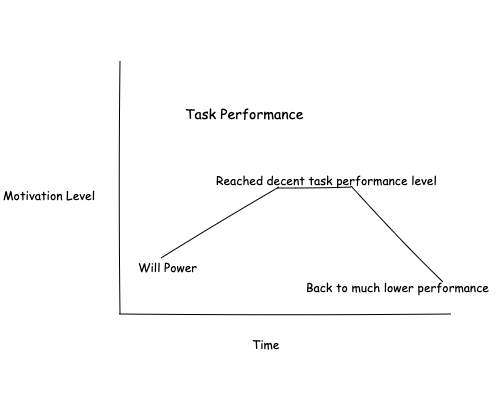
Task Performance goes up initially and then falls down.
Steps:
1. We apply willpower or use an external factor to get motivated.
2. We improve on the task as our motivation level increases.
3. Once we cross a level, motivation drops for the task as we stop applying willpower, and start failing on the task.
4. As we fail, we feel further demotivated and self sinking cementing our belief that the task is something we cannot do or are not interested in.
It’s the same old story again and again for most of the time. But if we look back what stayed with us is something we were able to do repeatedly, daily, weekly & monthly.
Hence “Routine” is a much better then “Motivation”.
Dictionary definition of Routine:
Routine – a sequence of actions regularly followed.
Create a routine to improve yourself in any task. Routine will slowly grow into a habit and in the end, lead to excelling in the task(skill).
I always wanted to learn guitar and tried picking it up multiple times.
Joined guitar classes, registered in a band, group practice, bought different types of guitar to keep motivated. It always went well for an initial couple of months but after some time it dropped and then completely gone. After a year or so had to start again.
After a lot of frustrating cycles, I decided to play guitar for 2 minutes Daily (Routine-Small steps). Even if I just take the guitar and do a couple of strumming but do it daily consistently.
Today I am much better at guitar, learned acoustic guitar to a decent level, and can play in front of an audience. I still keep practicing for at least 5-10 minutes on an average daily. And trying to play the violin now :).
Motivation comes and goes, but if we follow a Routine however small it is and it slowly grows into you!
Anyone can be busy. All you need to do to feel busy is to try to get two things done at once–or seek to beat a deadline that is stressing you out.
Productivity, on the other hand, has little to do with busy. Productivity requires bringing soft skills (real skills) to the table in service of the generous work you seek to do. Productivity is learned. And productivity takes guts.
When we compare to someone, their success, and riches it feels distraught & jealous. We expend a huge amount of energy around this and sap ourselves.
While we know that we have a fair chance to be as successful as someone if we put our mind and hard work into it.
The internal question we frame while comparing:
“Where someone is and Where I am today”
Let’s turn the question around to:
“Where someone is and Where I am going to be tomorrow”
It changes our perception, gives us motivation for putting energy in our future. And instead of dwelling on comparison and jealousy, it will be far more achieving and fruitful for us.
Do you want to grow in your career or do you want to be right? The two are mutually exclusive. The need to be proven right in arguments and discussions shuts you out to learning and course correction while you come across as arrogant.
The opposite is your need to grow which makes you open to suggestions, different ideas, and criticism. Some of which will add to your learning while leading to better results.
So, remind yourself each time that you are better off being wrong and learning something new for the future instead of being perceived to be right temporarily.
As a leader or manager, it’s puzzling and sometimes frustrating “why people do not do as expected”. Even though we define clear goals and target numbers, it’s still not achieved. Let’s look at some of the possible reasons & solutions.
#Miss-Communication:- Are we sure that goals and targets are clear to the individual. You should confirm that let’s ask the individual to repeat it in writing if possible. Not that you don’t trust, its just that it’s imperative to understand their clarity.
#How to Achieve? :- “What to Achieve” is clear, but what about the “How part”? Both the manager and the individual should have a fair understanding of how to reach the goal. This should give some confidence level on the achievement of the goal.
#Inspect what you expect:- This is the most critical step, to inspect what you are expecting at regular intervals. Check the status of the plan, where its reached, what are the bottlenecks etc and any glaring problems. Discuss with the individual to understand and help her if possible.
#Postmortem of past failures to learn:- Let’s learn from failures to ensure that in future we do not repeat the mistakes. Ask the individual to do the analysis and comeback with recommendations.
Overall “Inspect what you expect” at regular intervals to guide your team to achieve their goals.