Help Out Introvert(s) on Your Team…

Chances are, more than a few of your employees are introvert(s) and sometimes feel out of place—regardless of how competent they are. They are part of your team and they high performing employees. But sometimes being introverted comes their way to perform. As a manager, how can you help them?

Watch for red flags. 

Unsustainable work habits, such as constantly working long hours, can be a telltale sign. To prove themselves, introverts will work long hours, as they feel they’re not contributing enough. So can disengage work habits, such as withdrawal from a social group, and hesitancy to ask questions or speak up. In either case, start an honest dialogue with your employee early. Proactively ask if a sense of self-doubt might be underlying their behavior.

Focus on their work. 

Acknowledge high-quality work and signs of development. Positive feedback builds confidence and helps dissipate insecurity which is sometimes the cause of being introverted. If they make mistakes, emphasize that this is an integral part of learning.

Be vulnerable. 

Share some of your own professional or personal insecurities and failures, particularly those failures that you overcame in a meaningful way. This will remind them that what they’re feeling is normal—and that they can overcome it.


Be an Active Listener to be a Good Manager…

If you are managing a team, the ability to listen, effectively break down, and analyze an issue in order to find a solution — will be core to your success. Whether it is an internal team issue, a technical issue, or an external dependency. 

Being an active listener and ability to formulate effective questions to get others to open up is crucial. Here are a few ways to boost your ability to do this.

Hold your hypotheses loosely, Don’t be defensive.

Approach any problem with an open mind, and hold any of your hypotheses. Asking good questions can lead you to fundamentally reconsider your assumptions — but you have to be willing to do so without defensiveness.

Listen more than you talk. 

Active listening allows you to fully grasp another point of view, making it easier to question your own assumptions and biases.

Leave your queries open-ended. 

Avoid asking yes-or-no questions. Instead, try to get the respondent to open up at length.

Consider the counterintuitive. 

Every group has someone who’s unafraid to challenge the status quo, sometimes he/she is the right person to discuss any approach or any conclusion you are formulating.

Sleep on it. 

A good night’s rest can actually help your brain see a problem more clearly, be more attentive to others, and hence be able to resolve any issue faster.

I forgot to ask this question in my first job…

Build skills or Build relationships?

If you build skills it goes a short way. Skills change, skills need an upgrade otherwise will make you obsolete.

If you build relationships it goes long way. You know people, you know how to use skills thru them, and you can build a future with them.

Choose wisely – You cannot build relationships later but can build skills.

Ask this question at every job and every step in your career.

Change is Quiet…

When we are altering something, it can be a policy or the way we dress, or the way we behave. 

We imagine that everyone will notice it, but almost no one does. That’s because no one cares about the noises we have in our heads. 

We might think there will be a lot of commotion for doing something which is inconsistent, but if it’s useful, it will happen quietly without noise.

You Need a Bedtime, Too

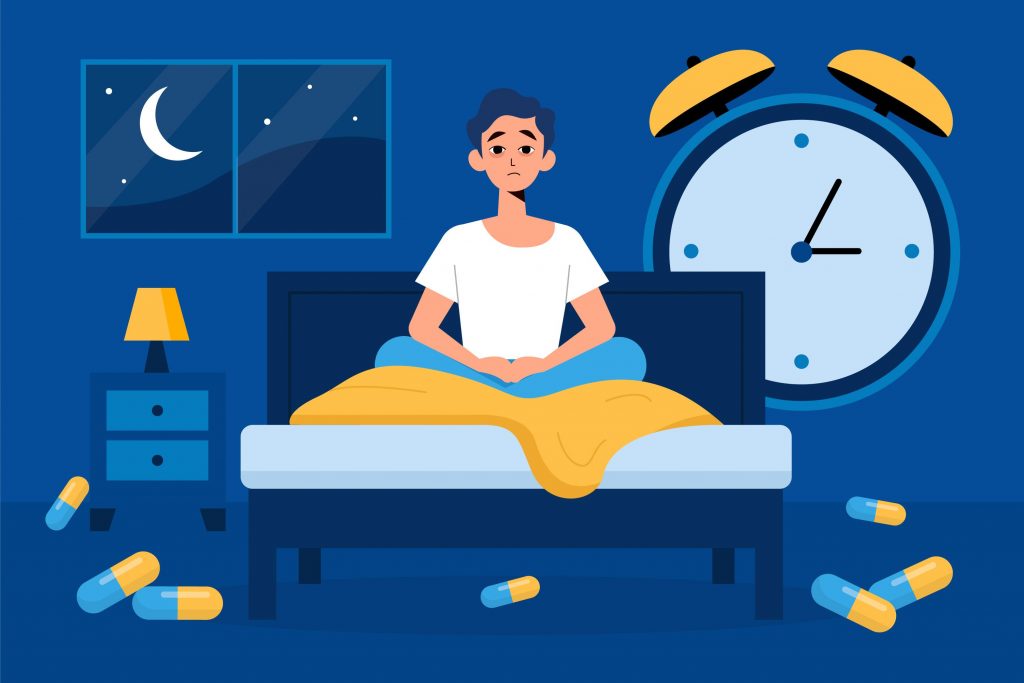
Have you felt tired this week? If so, the problem might not be that you’re getting too little sleep—it could be that you’re getting the wrong kind of sleep. Disorderly sleep (not enough some nights, too many others) is a recipe for exhaustion, volatile moods, and unproductive workdays. 

How can you establish a more consistent sleep schedule? 

The answer is painfully simple—and for many of us, painfully difficult to implement: You need a bedtime. The good news? Choosing the right bedtime only requires some quick math. Start by deciding when you need to wake up most days. Subtract seven or eight hours, depending on how much sleep you think you need. If you want to get up at 7 am, your bedtime should be 11 pm or 12 am. 

To hold yourself accountable, set a “wind-down” alarm for 30 minutes or an hour before your bedtime. Stick to it for a week. This week’s fatigue will be last week’s problem.

Build Your Emotional Courage…

In today’s environment, it’s imperative to handle things that make us feel uncomfortable. Maybe you have to say no to a noisy colleague or avoid going to a party with friends, or say no to a family friend. You may also need to raise a challenging issue with your manager or peer. 

To improve the way you deal with uncomfortable situations, build your emotional courage. Start by thinking of what kind of skill you want to get better at, giving feedback, listening, being direct — whatever you want to grow in. Then practice that skill in a low-risk situation. For example, let’s say you want to get better at being direct. The next time there’s a mistake on your phone bill, call customer service and practice being succinct and clear. Notice how you want to react — Get angry? Backpedal? — and focus on resisting those impulses. 

In summary, practice your emotions in low-risk situations and get used to them. These are the same feelings you’ll encounter in higher-risk situations at work, so learn to push through them. Continue to practice until you feel comfortable and can respond the way you’d like to.

4 Signs That You’re Too Emotional…

Being highly emotional towards something is a double-edged sword. On one hand, your passion propels you to perform and succeed. On the other, feeling too tethered to perform can drag you down, draining your energy and confidence. Here are some red flags to watch out for—and what to do about them.

You take criticism personally. 

If you’ve found yourself feeling angry, insecure, or demoralized after getting tough feedback or a minor setback, it’s time to take a step back. Remember, criticism of your work or interest is not a criticism of you as a person.

You are always working on it. 

Ask yourself: Am I overcompensating, working more hours in order to to be perfect in that thing? If so, try to shift your mindset to view rest, relaxation, and boundaries as necessary parts of your life—not just rewards.

Your mood swings very frequently.

You are very moody, suddenly getting angry or happy and immediately getting sad imagining something or the other. Next time this happens take deep breaths and calm yourself.

You’re a people-pleaser. 

Do you put others’ needs ahead of your own? If your kindness and generosity leave you feeling depleted rather than gratified, reflect honestly on your behaviors. When are you left feeling underappreciated? When does resentment start to bubble up? Identifying your people-pleasing triggers will help you mitigate them.

How to Delegate Effectively in a Way that Delivers What You Want

As a manager, you can’t have your hand in every single project. That’s why you need to delegate. But too often, people pass on poorly defined tasks and responsibilities and aren’t clear about their expectations, leaving the person on the receiving end to sort out a mess. 

Be as clear as possible.

If you want to delegate effectively, first take the time to think through what success would look like. Then communicate clearly with your colleague about what you are hoping the outcome of the work will be. Do you have something specific in mind or is there a range of acceptable results? Explain how you will evaluate both progress and the end result and whether there are certain milestones the person should hit along the way. 

Show how the task fits the larger goal.

You also want to clarify how the task you’re delegating connects to your team’s larger goals. If it’s one small part of a project, for example, explain how it fits into the whole. 

Ask for a summary of delegated work.

Once you’ve done all that, ask the person to sum up what they heard you request. You could even ask them to send you a summary in an email so that you capture their understanding — and correct it, if necessary. 

Taking these steps will help you delegate in a way that delivers the results you’re hoping for.

It doesn’t matter how hard you work…

Have you worked really hard for something and still haven’t got it? Ever wonder about the reason for not getting it?

There can be many, maybe you are too early in the time, maybe your partner or team goofed up, maybe you fear froze at the last minute, or maybe you were not good enough as others were.  Your hard work and their hard work were different, they were more focused, and they had luck.

But it still does not mean that hard work doesn’t work. It means that hard work only works in comparison with others. So if you are judging yourself, judge your competitors too. 

And if hard work has worked 80% of the time. That’s good enough for most of our life, and if you work in an office you could use resources from this https://www.movablepartitionwalls.co.uk/ to organize the work space.

So it doesn’t matter if hard work hasn’t worked, still need to work hard, as that’s the only factor in our control.

Tuning Your Breathing to Help You Feel Better…

Stress is part of our life. We all have to live with it and manage it. But there is a tool we all have access to which we forget: breathing

It might sound simple, but when done properly, breathing can make the difference between panic and resilience. Research shows that different emotions are associated with different forms of breathing. For example, when you feel anxious or angry, your breathing becomes irregular, short, and fast. When you feel joy or relaxation, your breathing will be regular, deep, and slow. And believe it or not, when you follow breathing patterns associated with different emotions, you begin to feel those corresponding emotions. 

So next time you’re feeling stress start to bubble up, try changing the ratio of your inhale to exhale. When you inhale, your heart rate speeds up. When you exhale, it slows down. Take a few minutes and breathe in for a count of four and out for a count of eight — this will calm your nervous system and keep stress at bay. By tweaking your breathing, you’ll start to feel better.