Knowledge by itself has not much value until it provides actionable items.
For example, gaining knowledge of investments & finance by the best sources still won’t get you richer, unless you apply it.
Wisdom is baking knowledge through experience, failure, and success. Mentors, coaches & experts are so valuable because they provide knowledge with actions.
But at the same time, knowledge is the first step towards success.
So while accumulating knowledge it’s critical to gain experience through practice & failure. Ultimately leading to success.
A day without anger (resentment) is the most productive day. We accomplish most on that day in comparison and are more energetic at the end of the day.
All the talk about focus and increasing productivity is thrown away the moment we meet anger or resentment.
Observe a day and notice that the more we feel angry or resented about things or people, the day becomes more exhausting.
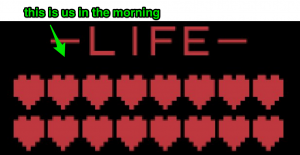
It’s like a video (computer) game, you have an energy bar when you start and anger keeps eating the bar till you bleed out at the end.
So…
If its chronic anger (resentment) start taking baby steps to solve it.
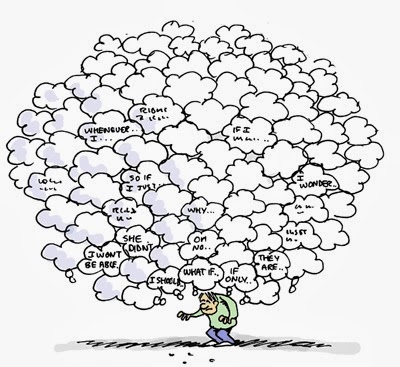
When we make a mistake at work, we replay it in our head for days or even weeks? This kind of overthinking is called rumination, and it can lead to serious anxiety.
To break out of the cycle, there are a few things we can do. For one, identify the rumination triggers. Do certain types of people, projects, or decisions make us second-guess ourselves? Notice when (and why) a situation is causing to start overthinking things. And try avoiding it for some time till we are back to normal.
It can also be useful to distance from negative thoughts by labeling them as thoughts or feelings. For example, instead of saying “I’m inadequate,” we can say “I’m feeling like I’m inadequate.” These labels can help us distinguish what we’re experiencing from who we truly are as a person and an employee.
Another way to short-circuit rumination is to distract ourselves. When our brain won’t stop spinning, try taking a walk, meditate, workout or fill out an expense report — do any simple activity to focus on for a few minutes.
With practice, we can overcome the rumination and get back to our productive selves.
When you express your honest opinion during an interview, you present yourself as you are, not as who you think the employer wants you to be. But disagreeing with an interviewer isn’t always easy because of the imbalance of power. Navigate the potential downsides by doing a few things before and during the interview.
First, research the company. Is the culture one where people are receptive to new ideas? Are the organization and its founders are known for inclusion and open-mindedness or do they have a slow-moving, legacy mindset? During the meeting, if the interviewer asks a question that gives you pause, resist the urge to answer immediately.
Take time to formulate a thoughtful response. And ask for permission to provide a different viewpoint. Say something like: “I see this differently. May I share my perspective with you?” Of course, follow your gut. If you think disagreeing won’t be well-received, then bite your tongue.
If the interviewer made you uncomfortable — if you felt dismissed or unheard — trust your instincts. When expressing differing opinions isn’t welcomed in an interview, it probably won’t be encouraged once you’re part of the company.
We all have our “Wall of Safety” that gives us a comfort zone.
For child, its the parent that doesn’t allow risking.
For adults, it is the social norms that doesn’t allow risking.
For poor, it is the daily wages that doesn’t allow risking.
For richer, it is the steady income that doesn’t allow risking.
It’s a cocoon to protect and allow us a path. On introspection, there are a lot of cocoons safeguarding us. While it keeps us comfortable it creates restrictions and boundaries.
Unless we break out, we will keep continuing what we are. But there is always a choice to explore, be different, perhaps better. Or be in the cocoon.
We are often told to pursue work we’re passionate about, but for many people, this simply isn’t feasible. Luckily, research shows that doing something you care about outside of work can benefit both your personal life and your career. Look for ways to craft your job to allow for more time for non-work passions.
For example, if you have some autonomy over your hours, start your day early to make more time in the evening for cultivating other interests. These extracurricular activities can be a way to develop skills, meet new people, or decompress. To find the right activities, ask yourself what you care about that you haven’t been able to pursue in your job. Outside of work, you have the freedom to try new things out, so experiment.
Remember that passions can wax and wane over time, and it’s okay to stop one activity and pick up another. Find other people who care deeply about your shared interest so you can build a sense of community.
Only a privileged few are able to match their passion to their job, but leading a full life outside of work allows us to bring our best selves to the office — or anywhere we go.
The flawed theory is that top-scoring students lead a successful and fulfilling life. Hence the push to score A+ in exams.
There’s no reason to think that this should be true.
Doing well on tests, paying attention to what’s being asked, being diligent in short-term error correction–these are the main hallmarks of someone who is good at school.
None of these are important once you’re charged with charting a new path, with figuring out what to do next. In fact, sometimes they get in the way. Too much of clutter which is irrelevant in the current life situation(s).
The educational regime was invented to produce compliant workers.
But the most compliant isn’t always suited to be the bravest, the most empathic or the most intuitive, these are far more important to lead a successful and fulfilling life.
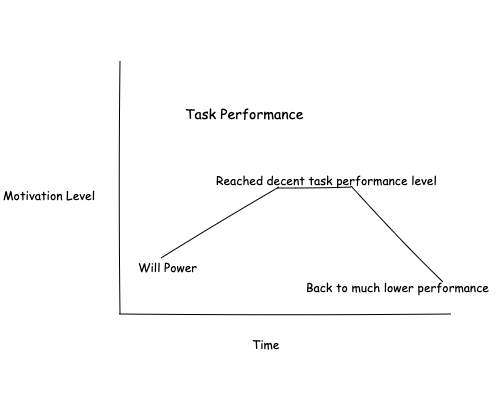
Task Performance goes up initially and then falls down.
Steps:
1. We apply willpower or use an external factor to get motivated.
2. We improve on the task as our motivation level increases.
3. Once we cross a level, motivation drops for the task as we stop applying willpower, and start failing on the task.
4. As we fail, we feel further demotivated and self sinking cementing our belief that the task is something we cannot do or are not interested in.
It’s the same old story again and again for most of the time. But if we look back what stayed with us is something we were able to do repeatedly, daily, weekly & monthly.
Hence “Routine” is a much better then “Motivation”.
Dictionary definition of Routine:
Routine – a sequence of actions regularly followed.
Create a routine to improve yourself in any task. Routine will slowly grow into a habit and in the end, lead to excelling in the task(skill).
I always wanted to learn guitar and tried picking it up multiple times.
Joined guitar classes, registered in a band, group practice, bought different types of guitar to keep motivated. It always went well for an initial couple of months but after some time it dropped and then completely gone. After a year or so had to start again.
After a lot of frustrating cycles, I decided to play guitar for 2 minutes Daily (Routine-Small steps). Even if I just take the guitar and do a couple of strumming but do it daily consistently.
Today I am much better at guitar, learned acoustic guitar to a decent level, and can play in front of an audience. I still keep practicing for at least 5-10 minutes on an average daily. And trying to play the violin now :).
Motivation comes and goes, but if we follow a Routine however small it is and it slowly grows into you!
“I want to go to this event, I can meet lots of interesting people and enjoy, oh! but I am not good at socializing, let’s skip“
“I want to try painting as a hobby but I am not creative, let’s skip it“
“I want to write a blog but my English language is not good, let’s skip it“
“I want to try doing X but I do not have Y hence I cannot do X, let’s skip“
The last sentence will fit for many things we do not try. As if we are fighting for our limitations and hence the limitations never change.
A child, she doesn’t know any limitations and hence she has no limitations. She tries everything that invokes curiosity. But as we grow we stereotype ourselves as per parents, peers & society. And, we keep convincing ourselves based on failure in one or two incidents in the past.
“Oh! he is so introvert and doesn’t mingle with others“
“I failed in stage performance once, hence I don’t know how to perform in front of an audience“
Unfortunately, we remember negatives more that we remember positives. And start criticizing ourselves to the extent we stop trying.
One of my friends use to play guitar but in his first stage performance, his guitar strings broke hence he couldn’t perform. Booed by the audience he vouched never to play guitar again. Yes, it might have been a big thing at that time but does that mean he shouldn’t play guitar or do not perform?
Let’s look back for any of our shortcomings (The shortcomings in our mind) and try to remember the incident or feedback which might have led to it. Does the incident or feedback have any relevance now? No. But due to our constant fighting ourselves to remind it, we have now a fully developed limitation.
So let’s not fight for our limitations but fight against them, try new things, try older things we missed. Let’s not worry about the past. It will not only remove our limitations and help us grow but also give us childlike happiness.
Anyone can be busy. All you need to do to feel busy is to try to get two things done at once–or seek to beat a deadline that is stressing you out.
Productivity, on the other hand, has little to do with busy. Productivity requires bringing soft skills (real skills) to the table in service of the generous work you seek to do. Productivity is learned. And productivity takes guts.